miércoles, 10 de enero de 2018

Unit 7

Causitive get and have

   1: Have you always done your own decorating or gotten a friend, to do (do) it?This spring, why not have your home, redecorated (redecorate) by paint works? No job too big or to small.
   2: My camera`s making a funny noise. I can`t afford a new one. Does anyone repair cameras these days? You can, get it repaired (get/repair) at Michael`s repairs. They`re pretty cheap.
    3: My TV`s not working. Can someone recommend a good shop? I like Sandi`s TV shop. It won`t cost a lot to, have it fixed (have/fix) here.

Need + passive infinitive and need + verb + -ing.
   
1: The radio needs to be fixed.
 2: The radio needs fixing.
 3: The door needs changing.
 4: The chair needs to be painted.

viernes, 5 de enero de 2018

Unit 12 careers


Job Interviews 

7 tips that will help you get the job. 

1. Practice and prepare.
Practice your responses to the typical job interview questions and answers most employers ask.

2. Research the company.
Do your homework about the employer and the industry, so you are ready for the interview question "What do you know about this company?" Try to relate what you have learned about the company when answering questions. Know the interviewer's name, and use it during the job interview. If you're not sure of the name, call and ask prior to the interview. 

3. Get ready ahead of time. 
Don't wait until the last minute to pick out an interview outfit, print extra copies of your resume, or find a notepad and pen. Have one good interview outfit ready.

4. Be on time. ( that means early)
Be on time for the interview. On time means five to ten minutes early. If need be, take some time to drive to the interview location ahead of time so you know exactly where you are going and how long it will take to get there.

5. Try to stay calm.
During the job interview, try to relax and stay as calm as possible. Remember that your body language says as much about you as your answers to the questions. Proper preparation will allow you to exude confidence.

6.  Show what you know. 
Try to relate what you know about the company when answering questions.  When discussing your career accomplishments, match them to what the company is looking for. 

7.  Follow up. 
Always follow-up with a thank you note reiterating your interest in the position. You can also include any details you may have forgotten to mention during your interview.

Unit 11 Trends


Trends

It's a general development or change in a situation or in the way that the people are behaving.
A new development in clothing, makeup, etc.

Will you try some of this 2018 trends?

Unit 10


Headline 
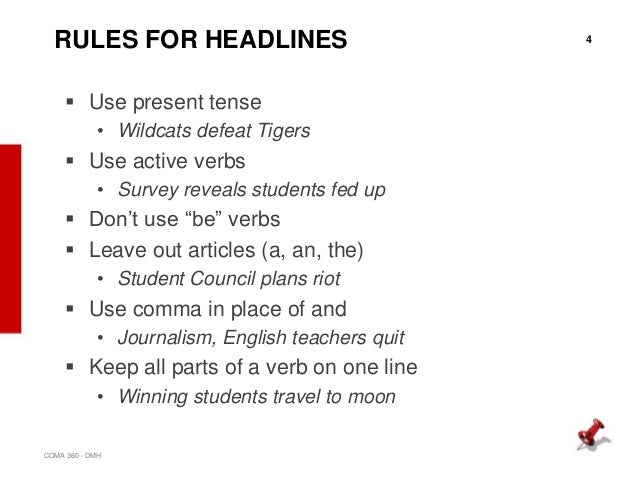
A Headline is a line of words printed in large letters as the title of a story in a newspaper, or the main points of the news that are broadcast on television or radio.

Here are some rules that will help you writing good headlines.

Headline principles.


Unit 9. Glossary


Bill: a request for payment of money owed, or the piece of paper on which it is written.

Charge: to ask an amount of money for something, specially for a service or activity.

Debt: something, specially money, that is owed to someone else, or the state of owing something.

Income: money that is earned from doing work or received from investment.

Savings: the money that you keep, specially in the bank or other financial organization.

Loan: an amount of money that is borrowed, often from a bank and it has to be paid back, usually together with an extra amount of money that you have to pay as a charge for borrowing.

Budget: a plan to show how much money a person or organization will earn and how much they will need or be able to spend.

jueves, 4 de enero de 2018

Unit 8

How to React when Your Apology isn't Accepted

If you have recently had an argument or wronged someone in any way, apologizing can be difficult. What can be even tougher is saying you’re sorry to someone who is unreceptive to the words. Whether you delivered the perfect “I’m sorry” or if it still needs a bit of work, you can work on reacting when your apology isn’t accepted by remaining calm, apologizing a second time, and then moving forward.
1. Keep your facial expressions neutral, but genuine.
2. Take a deep breath.
3. Avoid the defensive
4. Analyze possible solutions.
5. Put yourself in their shoes.
6. Take a break.

Unit 7. Glossary

Dent: a small hollow mark in the surface of something, caused by pressure or by being hit.

Fall off: if the amount, rate, or quality of something falls of, it becomes smaller or lower.

Hole:  an empty space in an object, usually with an opening to the object's surface, or an opening that goes completely through an object.

Leaking: (of a liquid or gas ) to escape from a hole or crack in a pipe or container; (of a container)to allow liquid or gas to escape.

Loose: Not firmly held or fastened in place.

Stain: a dirty mark on something that is difficult to remove.

Torn:  tearing and breaking into pieces.